Render respray and recolouring
Render Respraying Rotherham: Homes and Shop Frontages
Respraying changes the colour of existing render without replacing it. The surface is cleaned of algae and dirt, cracks and hollow patches are repaired, everything that should stay uncoated is masked, and a masonry coating is sprayed on. It suits a house whose render is sound but tired, and shop or office frontages that need a refresh without weeks of scaffold.

On this page
What can and cannot be resprayed
The render must be firmly bonded. Tap it: a dull, hollow sound over more than small patches means the coat is coming away, and paint will not hold it on. Old paint that flakes or chalks needs removing or sealing. Cement-based renders generally take a masonry coating; K Rend says its own render is a suitable surface for masonry paint if the colour is changed later.
Lime render is a different case. SPAB and Mike Wye both recommend limewash or a breathable silicate paint on lime, because ordinary masonry paints are less permeable and can trap moisture in an old wall.
- Clean Washed down, with algae and mould treated and left to work.
- Repair first Cracks and hollow patches are repaired before any coating.
- Prime or stabilise Where the coating maker requires it on that surface.
- Coating Usually two coats of a breathable masonry or silicone coating.
The usual order of work. The survey and the chosen products decide the actual steps.
Cleaning and repairs come first
Algae, lichen and traffic grime are killed and washed off before any coating. K Rend's maintenance guidance for its finishes suggests a warm wash with a suitable detergent, with the washer pressure turned down so the render is not damaged, and notes that this is not suitable for dry dash; it also suggests a yearly fungicidal wash where a wall stays wet. The wall then has to dry thoroughly.
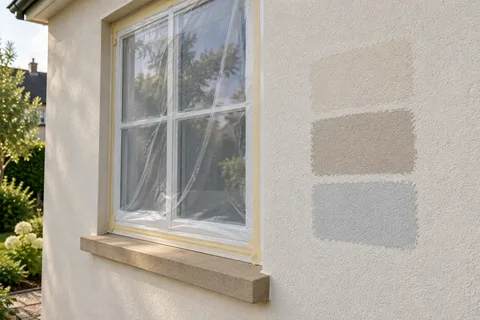
Cracks are opened and filled, hollow patches cut out and rebuilt, and repairs given their full curing time. Downpipes, alarm boxes, lights and signs are unscrewed or masked. Glazing, doors, paving and anything parked nearby is sheeted, because spray mist drifts.
Tap-test the render and check the existing coating.
Treat algae, wash the walls and let them dry.
Repair cracks and hollow areas and let repairs cure.
Take down or mask fittings, signs and pipes; sheet glass and paving.
Prime if the coating system requires it.
Spray and back-roll the coating, finishing each face to a natural break.
Domestic recolouring and commercial frontages
On a house, the main decisions are colour, which walls are included, and timing for dry weather. On a shop, café or small office, the frontage may need to stay open, so work is sequenced around trading, signs are taken down and refitted, and entrances are kept clear. Rotherham's shop front design guide, adopted in June 2020, covers frontage design, and is worth reading before a strong change of colour on a commercial street. K Rend also notes that its render is compatible with a range of anti-graffiti treatments for high-risk areas, which can be specified on ground-floor commercial walls.
Whatever the building, choose the coating for the render it is going on. Standard masonry paint suits sound cement render; silicate or mineral coatings suit lime and mineral renders. The coating maker's data sheet sets the temperature, drying time and number of coats.
Seeing the colour before you commit
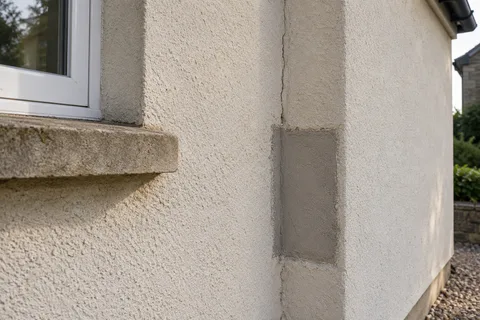
A sample of about a square metre on the actual wall, viewed in morning and afternoon light, tells you far more than a chart. Textured render looks darker than a flat swatch because of the shadows in its surface. For example, on a hypothetical terrace shop with grey render and a dark sign board, a pale sample beside the sign would show whether the contrast works before the whole frontage is sprayed.
On a house, ask the painter to apply the sample on the elevation that gets the least sun as well as the main front; a colour that looks warm in sunlight can look flat on a shaded side wall. Keep a note of the chosen product and colour code with the house papers, so a later touch-up uses the same coating.
Common questions
Can pebbledash be resprayed?
Yes, if it is sound. The coating has to be worked into the gaps between stones, so it takes more material and care than smooth render. Hollow dash should be repaired or removed first.
Does a tenant need the landlord's permission to recolour a shopfront?
Usually, because the render is part of the building rather than the tenancy, but it depends on the lease. Check the lease and ask the council whether planning permission is needed before booking the work.
How long does a respray take compared with a re-render?
Much less time on the wall, because there is no stripping, base coat or curing period for new render. The cleaning, drying, repairs and masking take longer than the spraying itself, and the forecast decides the start date.
See housing and planning information for Rotherham and nearby places, including the source and geography behind each figure.